
Key Takeaways
- Good Porsche records are dated invoices with the VIN, mileage, shop and parts listed. A stamped service booklet shows a visit happened. An invoice shows what was actually done.
- Read the records as a mileage trail. Steady, believable progress across the years matters more than any single receipt, and a gap is a question to ask before it’s a reason to walk away.
- Older Porsches (model year 2010 and earlier) are exempt from federal odometer disclosure, so on those cars the paperwork is often the only real evidence of mileage (NHTSA, 2019).
- Each type of Porsche has a few expensive jobs worth looking for by name, from the IMS bearing on M96 and M97 engines to valve adjustments and fuel lines on air-cooled 911s.
- Thin records don’t always mean walk away. They mean a more thorough inspection and a price that reflects the unknowns.
Porsche service records help you see beyond a seller’s description. Two Porsches can look the same in a listing. Same year, same color, similar miles, similar price. One comes with a thick folder of invoices going back years. The other comes with a stamped booklet, a recent oil change receipt and a seller who says it’s “always been dealer maintained.”
Most buyers sense the first car is the better bet. Knowing why is more useful. What does a good history actually contain? How do you spot the gaps that matter, and how much should missing paperwork change what you’re willing to pay?
This guide walks through how to read a Porsche’s service records the way a specialist would. It starts with what complete records look like and which jobs to look for by model. It also covers the red flags worth slowing down for, what to do when the history is thin, and how to build a file that helps your own car when it’s time to sell.
Why Porsche service records matter
Every used car benefits from a service history. On a Porsche it carries more weight, for two reasons.
First, several Porsche models have well-known, expensive failure points. Whether those jobs have been done, and when, can swing the real cost of ownership by a large amount. Records are how you find out without taking the engine apart.
Second, Porsches are often bought as enthusiast cars and kept for years. A car that’s been looked after by owners who cared tends to show it in the paperwork. A car that’s been passed around and run cheaply tends to show that too.
Records also matter when you sell. A well-documented Porsche is easier to sell, and buyers are more willing to pay for it because they’re taking on less risk.
Invoices tell you far more than stamps
Many Porsches came with a maintenance booklet that dealers stamp at each service. A full set of stamps is nice to see. On its own, though, a stamp tells you a car visited a shop on a certain date. It rarely tells you exactly what was done.
Itemized invoices are the real evidence. A useful invoice shows:
- The date and the mileage at the time of the work.
- The VIN (or at least the last digits), so you know it belongs to this car.
- The shop’s name and contact details, so the work can be traced if needed.
- The work performed and the parts used, with part descriptions or numbers.
- The labor hours. A big job billed at a suspiciously small number of hours deserves a question.
Owner receipts count too. Plenty of Porsche owners do their own maintenance well. A DIY history is credible when it’s backed by parts receipts with dates and a simple log of mileage and work done. Photos of the work are a bonus.
Read the records as a mileage trail
Here’s the single most useful habit: sort the records by date and write down the mileage on each one. You’re looking for a story that makes sense.
Steady progress is good. Mileage should climb at a believable rate. A car that covers a few thousand miles a year with regular servicing reads very differently from one that jumps 30,000 miles between visits.
The mileage should only go up. If an invoice from 2019 shows more miles than one from 2021, find out why. It could be a simple typo or a replaced instrument cluster, or it could be something you don’t want.
Gaps are questions. A two-year gap might mean the car was stored, or that the paperwork for that period simply got lost. Ask the seller and see whether the answer fits the rest of the file.
The odometer and the title should agree with the records. This matters most on older cars. Since 2021, federal rules require odometer disclosure for 20 years on model year 2011 and newer vehicles. Model year 2010 and older vehicles are exempt (NHTSA, 2019). On an older Porsche, the title may not record a meaningful mileage at all, so the service records are often the best evidence of how far the car has really gone.
Instrument cluster replacements happen. Gauge clusters do get replaced on older Porsches. When it’s done properly, the shop records the mileage at the swap and the new cluster’s starting reading. An undocumented cluster change makes the true mileage hard to confirm.
The big-ticket jobs to look for, by type of Porsche
Routine oil changes are good to see, but they don’t tell you much on their own. What separates a strong history from an average one is evidence that the expensive, model-specific jobs have been handled. These are the items worth looking for by name.
| Type of Porsche | Records worth looking for |
| Air-cooled 911 (to 1998) | Valve adjustments on pre-993 cars, engine top-end work or rebuilds, chain tensioner upgrades on earlier cars, replaced fuel lines, heat exchangers and clutch work. On a 964, the distributor drive belt. On a 993, any work on valve guides or the secondary air injection system. |
| M96 and M97 engines (996, 986 Boxster, 987 Boxster and Cayman, 997.1; roughly 1997 to 2008) | IMS bearing upgrade where the engine allows it, rear main seal, air-oil separator, water pump, spark plugs and coil packs, clutch. Any borescope or engine inspection results. |
| Later direct-injection cars (from about the 2009 model year) | No IMS bearing to worry about. Look for regular oil and filter changes, spark plugs, brake fluid and coolant at their intervals, and PDK fluid service where fitted. |
| Early V8 Cayenne (roughly 2003 to 2010) | Replacement of the original plastic coolant pipes in the engine valley, plus the usual transfer case and driveshaft checks. |
| Every Porsche | Brake fluid changes (Porsche’s schedules call for every two years), tires replaced by age as well as tread, and the major scheduled services by time as well as miles. |
Your owner’s manual or maintenance booklet lists the intervals for your specific car. You don’t need to memorize them. Check the records for evidence that the big items were done, and done roughly when they should have been.
Who did the work matters too
A record from a Porsche dealer, an established Porsche specialist or a careful owner can all be good. What you’re judging is whether the person doing the work knew the car.
Porsche dealers follow factory procedures and use factory diagnostic tools. Dealer records are generally easy to verify.
Independent Porsche specialists often look after cars once they’re out of warranty, and many owners use them for years. A long relationship with one specialist is usually a good sign.
Owner-maintained cars can be excellent. Look for parts receipts and a mileage log that show the owner tackled the model-specific jobs, not only oil changes.
If you don’t recognize a shop on the invoices, look it up. A shop that’s still in business and works on Porsches can sometimes confirm work it did. Ask the seller’s permission before contacting it.
Check recalls separately
Service records don’t always show recall work, so check recalls on their own.
Porsche runs a recall lookup on its US website. Enter the 17-character VIN and it shows recalls on that car that are still open. It covers recalls from calendar year 1999 onward (Porsche, 2026). NHTSA, the US federal safety agency, also offers a VIN recall search at NHTSA’s recall search.
An open recall isn’t a reason to pass on a car. A Porsche dealer handles recall repairs, and they’re done at no charge. It’s simply something to get done, ideally before or soon after you buy. For air-cooled 911s built before 1999, these lookups won’t tell you much, so the paper records carry all the weight.
What a vehicle history report can and can’t tell you
Vehicle history reports are worth running. They can show title problems, reported accidents, odometer readings recorded at certain events and how many owners a car has had.
They only know what’s been reported to them, though. Many independent shops and almost all DIY work never appear. A minor accident paid for privately won’t show up either. A clean report is reassuring, but it’s no substitute for a folder of real invoices, and it can’t tell you whether an IMS bearing was upgraded or a set of fuel lines was replaced.
Treat the report as a cross-check. Compare its mileage readings with your mileage trail. If the two disagree, find out why.
Red flags worth slowing down for
None of these automatically rules out a car. Each one deserves a straight answer before you go further.
Mileage that goes backward between invoices, or a mileage jump that doesn’t fit the car’s history.
Invoices with a different VIN, or invoices with the VIN cut off or blanked out.
A thick file that’s all recent. A batch of work done just before the sale, with little before it, can be honest preparation. It can also mean years of nothing.
“Engine replaced” with no paperwork. A replacement engine can be fine, but you need to know what it is and who installed it.
Records that skip the known big items. A 15-year-old 996 with plenty of oil changes but no mention of the IMS bearing, water pump or rear main seal hasn’t been proven bad. Those jobs are just still unknowns you’ll need to budget for.
Only copies, no originals. Copies are common and usually fine. A file made up entirely of reprints with no originals is worth asking about.
A seller who’s vague. “It’s always been serviced” is not a record. A good seller can usually tell you who looked after the car and roughly when the major work was done.
When the records are thin
Plenty of good cars have patchy paperwork. A previous owner lost a folder, or a long-term owner used a local shop that kept poor records. Thin records don’t make a car bad. They make it unknown.
That changes how you approach it:
- Make the pre-purchase inspection more thorough. A leak-down test, a borescope on engines that warrant it and a full scan of the engine computer’s data can fill in some of what the paperwork can’t.
- Price in the unknowns. If there’s no evidence of the big model-specific jobs, assume they may need doing and factor that into your offer.
- Plan a baseline service. After you buy, have the fluids, filters, belts and known weak points dealt with so your own history starts from a known point.
Building a file that adds value to your own car
If you already own a Porsche, the records you keep now will matter when you sell. A well-organized file is one of the easiest ways to make a car stand out.
Keep originals and make digital copies. Scan or photograph every invoice and store the copies somewhere safe. Keep the originals together in one folder.
Keep it in date order. A buyer, or their inspector, should be able to follow the mileage trail without effort.
Document your own work. If you do maintenance yourself, keep the parts receipts and a simple log of the date, mileage and work done. Photos help.
Keep the old paperwork too. Window stickers, Porsche’s Production Specification, previous owners’ records and inspection reports all add to the story.
Note the big jobs clearly. If the IMS bearing was upgraded or the fuel lines were replaced, make sure that invoice is easy to find. Some owners keep a one-page summary at the front of the folder.
Porsche service records checklist
- Sort every record by date and note the mileage on each one.
- Check the mileage only goes up and climbs at a believable rate.
- Look for itemized invoices with the VIN, mileage, shop and parts listed.
- Find the big model-specific jobs by name for the type of Porsche you’re looking at.
- Run the VIN through Porsche’s recall lookup and a vehicle history report, then compare their mileage readings with the records.
- Ask about every gap, and see whether the answers fit the rest of the file.
- Let the records shape the inspection and the price, especially when they’re thin.
The short version
A good Porsche service history is a set of itemized, dated invoices that tell a consistent mileage story and show the model’s big jobs being handled. Stamps help, and a clean vehicle history report helps, but neither replaces invoices that show what was actually done. On older Porsches, the records are often the best evidence of mileage you’ll get.
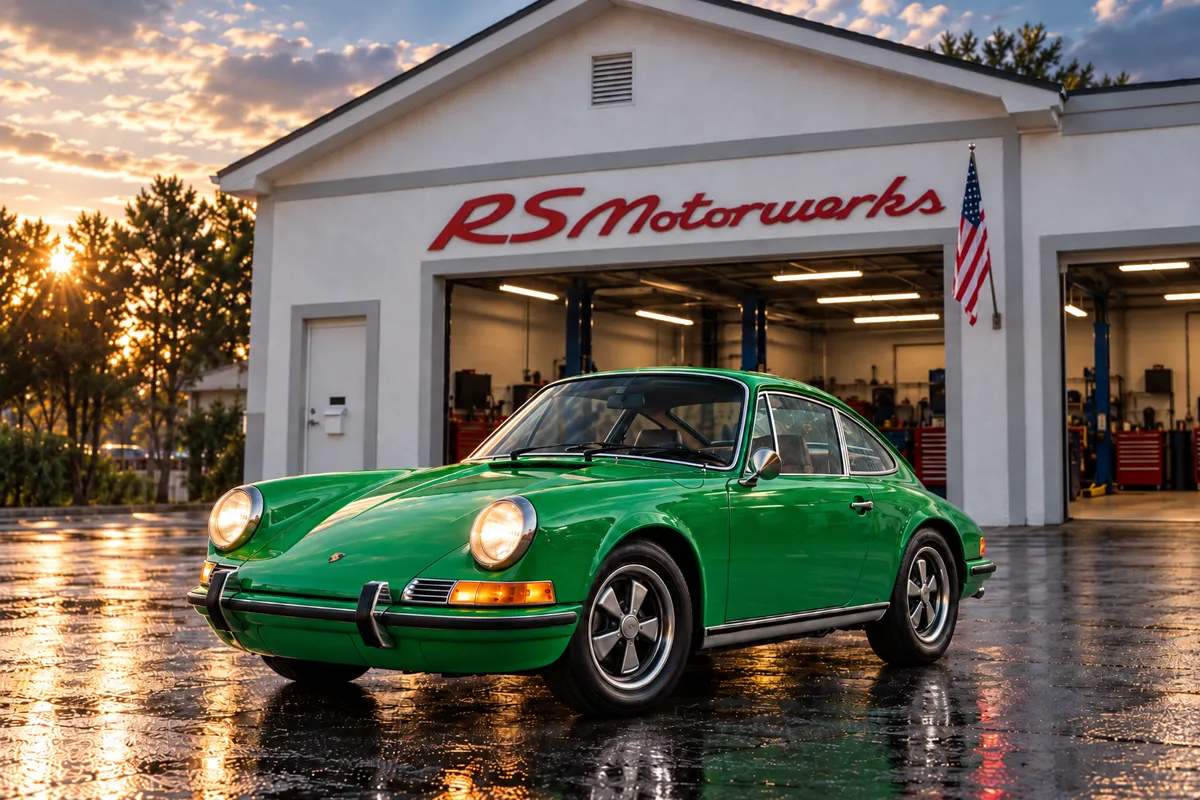
Read the file in date order and look for the expensive model-specific work by name. Check recalls separately, and ask about every gap. When the records are thin, lean harder on the inspection and price the unknowns in. If you’d like a Porsche specialist to look over a car and its paperwork before you buy, RS Motorwerks in Norcross can help with an independent pre-purchase inspection. Review our maintenance services to plan care after you buy, or contact the shop at (404) 275-9926.
Frequently asked questions
How can I check a Porsche’s service history by VIN?
There isn’t a single public database of Porsche service records. Start with the seller’s invoices and booklet. A Porsche dealer can often see work logged by other Porsche dealers, though what they’ll share varies. A vehicle history report adds reported events. Independent shop and DIY work only shows up in the owner’s paperwork.
How do I look up recalls on a Porsche?
Use Porsche’s recall lookup on its US website, or NHTSA’s VIN search at NHTSA’s recall search. Enter the 17-character VIN to see open recalls. Porsche’s tool covers recalls from 1999 onward, and recall repairs are done at no charge by a Porsche dealer.
Is a Porsche with no service records worth buying?
It can be, if the price reflects the risk and a thorough inspection checks out. Assume the expensive model-specific jobs haven’t been done and budget for them. Plan a full baseline service soon after you buy.
Do dealer stamps in the service book count as records?
They’re useful because they show the car was serviced on a certain date. They rarely show exactly what was done. Itemized invoices are much stronger evidence, so ask for them alongside the booklet.
Does DIY maintenance hurt a Porsche’s value?
Not if it’s documented well. Parts receipts, a dated mileage log and photos make an owner-maintained history credible. Undocumented DIY work is what makes buyers nervous.
Why don’t older Porsche titles show the mileage?
Federal odometer disclosure rules exempt older vehicles. Model year 2011 and newer cars require disclosure for 20 years, while model year 2010 and older cars fall under the earlier 10-year exemption (NHTSA, 2019). On those cars, service records are the main evidence of mileage.